Triathlon Wetsuit Ban: DTU Rules 2026 Explained Simply
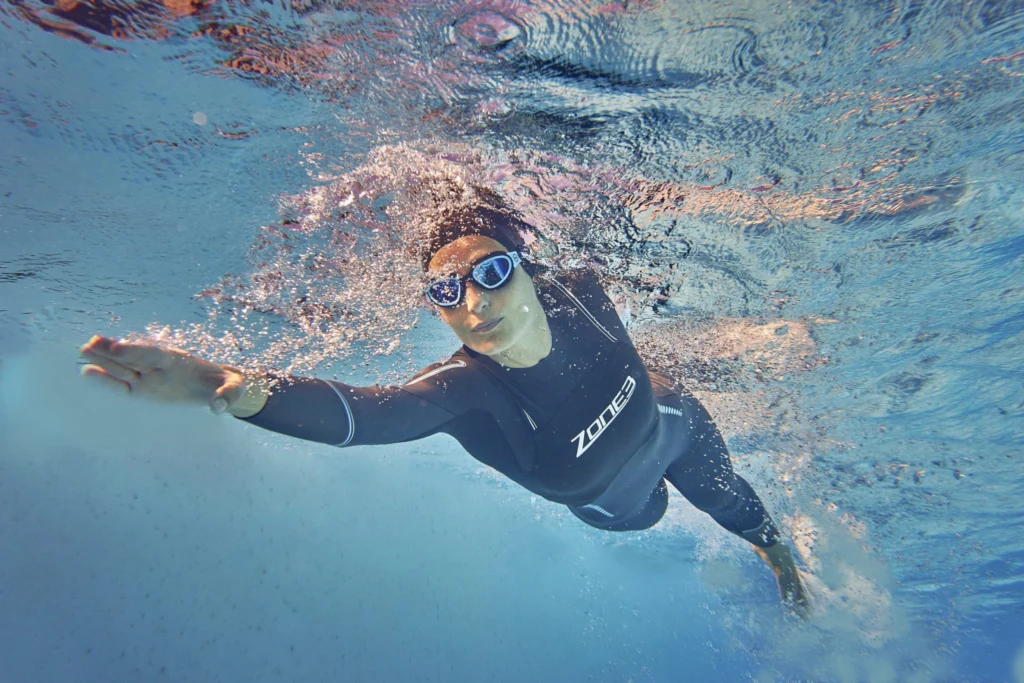
Few things spark as much discussion on the eve of a race as the question: wetsuit or no wetsuit? A wetsuit ban in triathlon can turn your whole swim strategy upside down, while mandatory wetsuits in cold water bring safety. And in between lies the range in which you get to decide for yourself.
Many age-group athletes don’t know exactly how this decision is made. Where is the temperature measured? Which temperature limits apply to sprint, Olympic, middle and long distance? And why does the air temperature suddenly matter?
We at FlipSoc have summarised the wetsuit rules of the German Triathlon Union (DTU) from the 2026 competition regulations clearly for you. One important point up front: the current competition regulations or the rules of your race always take precedence.
In short: Under the 2026 DTU competition regulations, the following applies to age groups up to AG 55–59 over sprint and Olympic distance: wetsuits mandatory at 14.0–15.9 °C, allowed at 16.0–21.9 °C, banned from 22.0 °C. Over middle and long distance, wetsuits are allowed up to 24.5 °C, with the ban applying from 24.6 °C. Below 14.0 °C there is no swim.
When is there a wetsuit ban in triathlon?
A wetsuit ban applies in triathlon when the measured water temperature reaches or exceeds the upper limit for the respective distance and age group. For age-group athletes up to AG 55–59, this limit is 22.0 °C over sprint and Olympic distance and 24.6 °C over middle and long distance.
The background: a wetsuit significantly improves buoyancy and body position in the water and makes you faster. At the same time, it insulates. In warm water it therefore no longer offers any safety benefit, but can lead to overheating and mainly provides a performance advantage. In cold water, on the other hand, it protects against hypothermia – hence the requirement at the lower end of the temperature range.
The DTU sets this out in §§ 20–21 of its competition regulations. The rules differ by distance, age group and elite status.
The 2026 DTU wetsuit rules at a glance
The following table shows the temperature limits for age-group athletes up to and including AG 55–59 under the 2026 DTU competition regulations.
| Distance | Wetsuit mandatory | Wetsuit allowed | Wetsuit banned |
|---|---|---|---|
| Sprint distance (0.5–0.75 km) | 14.0–15.9 °C | 16.0–21.9 °C | from 22.0 °C |
| Olympic distance (1.5 km) | 14.0–15.9 °C | 16.0–21.9 °C | from 22.0 °C |
| Middle distance (1.9–2.9 km) | 14.0–15.9 °C | 16.0–24.5 °C | from 24.6 °C |
| Long distance (3.0–4.0 km) | 14.0–15.9 °C | 16.0–24.5 °C | from 24.6 °C |
The following also applies to all distances: there is no swim if the water temperature is below 14.0 °C. And if the air temperature is 5.0 °C or lower, there is no swim either.
From AG 60–64: uniform limits
For athletes from the 60–64 age group upwards, the more generous limits apply over all distances: wetsuits mandatory at 14.0–15.9 °C, allowed at 16.0–24.5 °C, banned from 24.6 °C. So even over sprint and Olympic distance, you may swim in a wetsuit up to 24.5 °C.
Elite: stricter upper limits
For elite athletes, the limit is lower: for swim distances up to 1,500 m, wetsuits are banned from 20.0 °C, and from 1,501 m upwards, from 22.0 °C.
How is the water temperature measured?
Under the DTU competition regulations, the water temperature is measured one hour before the start along the swim course at a depth of 60 cm, and the lowest measured value counts. So it’s not about the temperature in the shallow, sunlit water by the shore, but about conditions on the course.
The fact that the lowest value counts is a safety rule: if there are colder sections on the course, for example due to inflows, deeper areas or shade, the decision should take them into account. The final decision is made by the race officials on race day.
For you, this means: the water temperature you see in an app the week before the race or during a practice swim is only a guide. Only the official measurement and announcement on race day are binding.
Why does the air temperature matter?
The air temperature matters because cold air increases the risk of hypothermia before, during and after the swim. That’s why the DTU competition regulations include two rules that take the air into account.
- No swim if the air is 5.0 °C or lower: if the air temperature is 5.0 °C or below, there is no swim.
- Correction table: if the water temperature is 22.0 °C or below and the air temperature is 15.0 °C or below, the water temperature is adjusted downwards using a correction table.
What does this mean in practice? On a cool, windy morning, the temperature used for the wetsuit rule can be set lower than the actual measured value. As a result, “wetsuit allowed” can turn into “wetsuit mandatory”, for example. The exact correction values are in the table in the competition regulations – the race officials apply them on race day.
Do the DTU rules also apply to Ironman races?
No, not automatically: Ironman races have their own set of rules with their own wetsuit limits. So check the race rules and the organiser’s athlete information for every race.
The same goes for other events outside the DTU framework or races abroad that fall under other federations. What’s allowed in one race may be banned in the next. Read the race rules early so you can tailor your training to both scenarios.
What requirements must a triathlon wetsuit meet?
Under DTU rules, a triathlon wetsuit may be no more than 5 mm thick and, as a dedicated swim wetsuit, should be flexible at the shoulders. A thick surf or dive suit isn’t just slower, it can also cause problems at the equipment check.
Most triathlon wetsuits are full suits with a back zip, because that makes them the quickest to take off. Why that is and how other designs differ is explained in our comparison back zip or front zip.
What to do if wetsuits are banned
If wetsuits are banned, you swim in your triathlon suit or an approved swimskin and adjust your pacing, body position and expectations. If you prepare for this in advance, you’ll lose far less time and composure.
- Train without a wetsuit: swim regularly without a wetsuit in open water or the pool. That way you know your body position and pace without a buoyancy aid.
- Strengthen your kick and core: without a wetsuit, your legs tend to sink. Good core tension keeps you flatter in the water.
- Adjust your pacing: plan for a slower swim time and don’t start too fast, so you don’t go into the red in the first third.
- Check swimskins: many races allow special swimsuits without neoprene (swimskins) when wetsuits are banned. Check in advance whether the race rules allow them and which models.
- Rethink the transition area: without a wetsuit, there’s nothing to take off – plan a leaner transition accordingly.
- Stay calm: a wetsuit ban affects everyone in your start wave equally. Focus on your own race.
You’ll find more technique and training tips for the swim in our article Swimming faster in triathlon.
What to do if wetsuits are mandatory
If wetsuits are mandatory, you have to swim in a wetsuit – you may not start without one. According to the DTU, wetsuits are mandatory at a water temperature of 14.0–15.9 °C, regardless of distance and age group.
- Always pack your wetsuit: even at summer races, a cold morning or the air temperature correction can make wetsuits mandatory.
- Prepare for the cold: a neoprene cap or a second swim cap if the race rules allow it; don’t stand in the cold water too long before the start.
- Warm up in the water: swim briefly so your breathing and body get used to the cold. Cold water can trigger cold shock with rapid breathing – walk in calmly.
- Listen to your body: if you feel unwell, signal to the water safety team. Your health comes first.
Wetsuit on race day: putting it on and taking it off
When wetsuits are allowed or mandatory, two moments matter on race day: putting it on before the start and taking it off in the transition area. Putting it on in particular is often underestimated – in the pre-start rush, with nervous hands and sweaty skin.
Into your wetsuit stress-free – with FlipSoc
Triathlon wetsuits fit tightly and have thin, delicate material at the shoulders. Tugging at the cuffs before the start risks fingernail tears and wastes energy. That’s why many triathletes use a plastic bag over their foot and hand, which, however, easily tears or gets left behind in the transition area.
The FlipSoc is a reusable donning aid made of smooth ripstop nylon. You pull it over your foot or hand, slip into the leg or sleeve, and the neoprene glides through the cuff instead of sticking to your skin. This works even if you’re already a little sweaty from your warm-up. At around 100 g, it fits into any transition bag.
For taking the suit off on the way to the transition area, we’ve put together dedicated tips: in our guide How to take off a wetsuit, you’ll learn how to get the suit off quickly and gently. You’ll also find first-hand experience from a real race, including the wetsuit change, in our report on the Rothsee triathlon.
Frequently asked questions about the triathlon wetsuit ban
At what water temperature are wetsuits banned in triathlon?
For age groups up to AG 55–59, the 2026 DTU competition regulations ban wetsuits from 22.0 °C over sprint and Olympic distance and from 24.6 °C over middle and long distance. From AG 60–64, the 24.6 °C limit applies over all distances. For elite athletes, the limits are 20.0 °C up to 1,500 m and 22.0 °C from 1,501 m.
When is a wetsuit mandatory in triathlon?
Under the 2026 DTU competition regulations, wetsuits are mandatory at a water temperature of 14.0 to 15.9 °C. Below 14.0 °C there is no swim at all. The decision is made by the race officials on race day.
Where and when is the water temperature measured in triathlon?
The water temperature is measured one hour before the start along the swim course at a depth of 60 cm. The lowest measured value is what counts. In cool air, the value can also be adjusted downwards using a correction table.
Do the DTU wetsuit rules also apply at Ironman?
No, Ironman races have their own set of rules with their own temperature limits. So always check the race rules and athlete information for the race in question. The same applies to races abroad.
How thick can a triathlon wetsuit be?
Under DTU rules, a wetsuit in triathlon may be no more than 5 mm thick. Dedicated triathlon wetsuits are also especially flexible at the shoulders. Surf or dive suits are usually unsuitable for racing.
What do I do if wetsuits are banned at my race?
You swim in your triathlon suit or in an approved swimskin, if the race rules allow it. Prepare by training regularly without a wetsuit and plan your swim pace a little more conservatively. A wetsuit ban affects all starters in your wave equally.
Conclusion
Whether wetsuits are mandatory, optional or banned in triathlon depends on the water temperature measured on race day – one hour before the start, at a depth of 60 cm, using the lowest value on the course. Under the 2026 DTU competition regulations, for age groups up to AG 55–59 the ban applies from 22.0 °C over sprint and Olympic distance and from 24.6 °C over middle and long distance. Wetsuits are mandatory at 14.0–15.9 °C; below that, there is no swim.
Prepare for both scenarios, check the race rules early and remember: the current competition regulations or the rules of your race always take precedence. Ironman races have their own set of rules.
And so that you don’t wrestle with your wetsuit before the start but head to the start line focused, try the FlipSoc as a donning aid for your triathlon wetsuit – with free shipping and free returns within 14 days.