


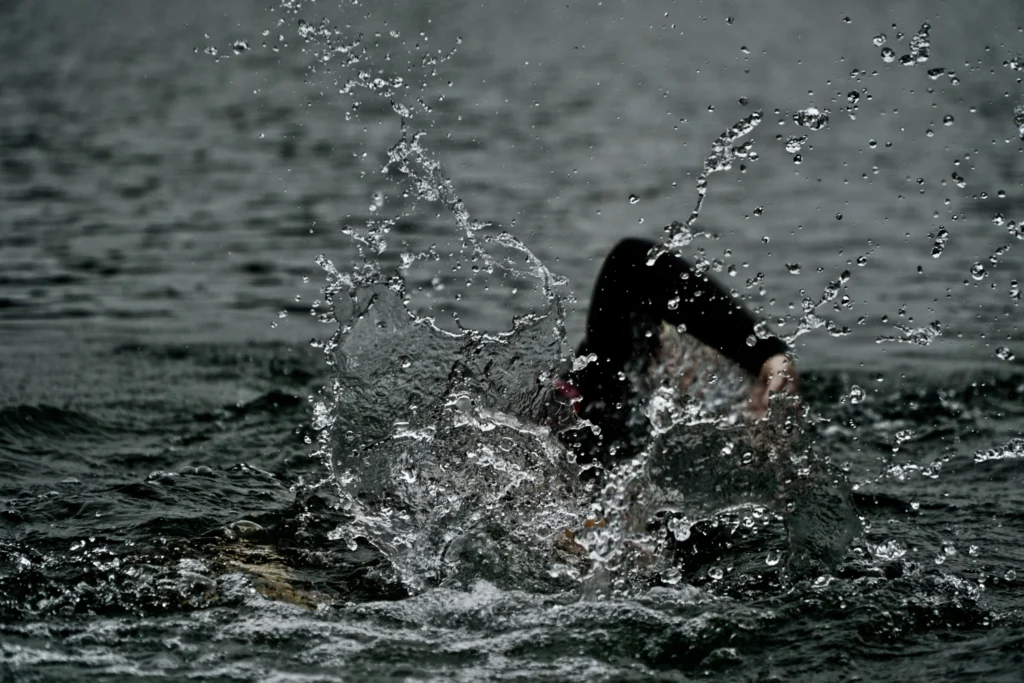
Swimming in a Wetsuit—Your Best Choice for Comfort and Performance
Why Swim in a Wetsuit? Open-water swimming places high demands on both your equipment and your body. A wetsuit can make the difference between a strenuous and an optimized swimming experience. This page gives you an in-depth look at the benefits, selection criteria, and care tips for wetsuits, as well as helpful information about the FlipSoc donning aid.
Why Wear a Wetsuit? – More Than Just Protection from the Cold
A wetsuit isn’t just designed for cold water. Here are the main reasons why it’s so popular among swimmers, triathletes, and water sports enthusiasts:
- Thermal Protection: The wetsuit forms an insulating layer between the body and the water, which retains body heat and prevents the body from getting cold. This is essential for long-distance swimmers or during training sessions in cooler waters.
- Buoyancy and Stability: The material provides buoyancy, lifting the body in the water and thereby improving swimming posture. This reduces drag and helps swimmers move through the water more efficiently. Triathletes benefit particularly from this property, as it allows them to achieve better performance with less effort.
- Protection against skin irritation and jellyfish stings: A wetsuit protects the skin from mechanical stress, such as friction caused by swimming movements, as well as from jellyfish stings and contact with sharp surfaces, such as rocks or coral.
The Construction and Functioning of Wetsuits
Wetsuits are made of synthetic rubber that traps microscopic air bubbles, providing both buoyancy and insulation. Here are the key features you should keep in mind:
- Suit thickness: This determines the temperature at which the suit is used. For warm waters, suits that are 1–2 mm thick are sufficient, while cold water requires suits that are 5–6 mm thick. Wetsuits are often thicker in the midsection than at the extremities to retain heat while ensuring freedom of movement.
- Seam Technologies: Blind-stitched seams, which make the suit more waterproof, are essential in cold water. Glued and sewn seams provide additional stability.
Types of Wetsuits and Their Benefits
- Shorties and long johns: Ideal for warmer waters and short swims. They offer freedom of movement and are easy to put on.
- Full-body wetsuits: These are essential for cold water. They offer the best protection and buoyancy.
- Zip Types: Back-zip suits are easier to put on, while chest-zip models offer better protection against water ingress and greater freedom of movement. Zip-free versions are the most advanced option and the most waterproof, but they are more difficult to put on.
Benefits of the FlipSoc When Putting on Wetsuits
Putting on a tight-fitting wetsuit can be a hassle. That’s where the FlipSoc comes in as an indispensable tool:
- Protecting the suit: The FlipSoc pulls the material evenly over the legs and arms, which prevents abrasion and extends the suit’s lifespan.
- Time-saving and ergonomic: Saves time and reduces physical strain, since no excessive pulling is required.
Here’s how to use the FlipSoc:
- Place the FlipSoc on your foot or hand.
- Gently slide into the suit while using the FlipSoc to guide the fabric.
- Adjust the fit of the suit and repeat the process with the other limbs.
Care Tips for Your Wetsuit
With proper care, a wetsuit can last for many years:
- Rinse the wetsuit with clean water after each use to remove salt and dirt.
- Avoid direct sunlight while drying, as UV rays can damage the material.
- Clean the wetsuit occasionally with a special neoprene soap to remove unpleasant odors and maintain the quality of the material.
Training Tips for Swimming in a Wetsuit
- Regular Training in a Wetsuit: Swim regularly in your wetsuit to get used to the extra buoyancy and the different feel in the water. This will help you be fully prepared for the competition.
- Technical drills: Use training sessions without a wetsuit to strengthen your basic technique, and alternate between the two to adapt to both scenarios.
Conclusion – The Wetsuit: A Key Part of Your Swimming Gear
A high-quality wetsuit is an investment in comfort, safety, and performance. Combined with the right donning aid, such as the FlipSoc, it makes water sports more relaxing and efficient. Spend less time putting on your wetsuit and more time enjoying swimming, surfing, or diving