Kitesurfing Wetsuit: Thickness, Wind Chill & Changing at the Spot
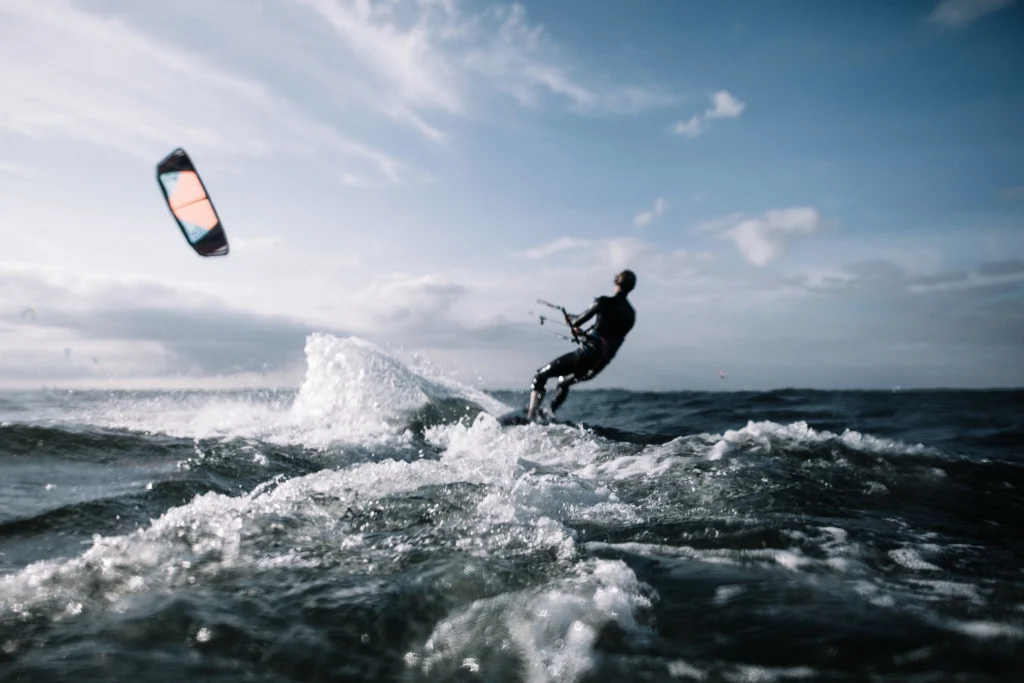
The wind is perfect, the gusts are steady, and all you want is to get on the water. But then you’re standing in the car park in the wind, battling with your wetsuit while sand whips around your legs. Anyone looking into the right kitesurfing wetsuit soon realises: kiting and wing foiling follow different rules than surfing.
The reason is the wind. It’s your engine, but also your biggest cold factor. You spend a lot of time above the water’s surface, and wet skin and wet neoprene are exposed to the apparent wind and the wind at the spot. That cools you down much more than the water temperature would suggest.
In this article, we at FlipSoc explain which neoprene thickness makes sense for kiting and wing foiling, how to wear your harness properly over your wetsuit and how to get changed calmly at a windy spot.
In short: For kitesurfing and wing foiling, choose your wetsuit a bit warmer than for surfing at the same water temperature, because of the wind chill effect. What matters are windproof surfaces, good freedom of movement in the upper body and a suit that doesn’t press under the harness. To get changed at the spot, shelter from the wind, a poncho and a mat to stand on help.
Why do kiters get cold faster than surfers?
Kiters get cold faster than surfers because they spend much more time above the water in the wind, and wet neoprene cools down strongly through evaporation. This wind chill effect means the perceived temperature can be far below the actual air or water temperature.
A surfer spends a lot of time lying on the board with a large part of the body in the water. A kiter or wing foiler, on the other hand, stands upright in the wind almost the whole time, often in strong winds. Then there’s the apparent wind. Water evaporating from the surface of the wetsuit draws heat from your body. The stronger the wind, the faster this happens.
Wind chill is therefore the most important factor when choosing a kite wetsuit. It also explains why, on a sunny but windy day, you can quickly start to feel cold despite pleasant air as soon as you’ve fallen into the water once.
What wetsuit thickness do I need for kitesurfing?
For kitesurfing, you usually need a wetsuit about one level warmer than for surfing at the same water temperature, because the wind cools you down even more. The exact choice depends on water temperature, wind strength, air temperature and how sensitive you are to cold.
The general guidelines by water temperature, which we explain in detail in our article on wetsuit thickness, serve as a starting point. For kiters and wing foilers, the following guide, which already factors in the wind, is helpful.
| Water temperature | General guideline | Guide in strong wind (kite/wing) |
|---|---|---|
| above approx. 24 °C | Lycra/UV shirt | Lycra or thin neoprene top against the wind |
| approx. 18–23 °C | Shorty or 2 mm or 3/2 mm | rather a 3/2 mm full suit or a long-sleeve shorty |
| approx. 15–18 °C | Full suit 3/2 mm | rather 4/3 mm, depending on the wind |
| approx. 12–15 °C | 4/3 mm, boots if needed | 4/3 to 5/4 mm, boots recommended |
| approx. 9–12 °C | 5/4 or 5/3 mm + boots, gloves, hood | 5/4 mm with full accessories |
| below approx. 9 °C | 6/5/4 mm with hood and accessories | 6/5/4 mm, accessories, short sessions |
Numbers like “4/3” mean: the first number is the neoprene thickness on the torso in millimetres, the second on the arms and legs. The material is thicker on the torso because that’s where you lose the most heat. On the arms and legs it stays thinner so you remain flexible.
Kitesurfing wetsuit: what matters?
What matters in a kite wetsuit is windproofing, freedom of movement in the upper body, durable knees and good compatibility with the harness. These points set it apart in practice from a pure surf wetsuit, even though many suits work for both sports.
Windproof surface
Many suits have a smooth, rubberised outer layer on the upper body instead of fabric. This surface soaks up less water, so less water can evaporate – which reduces wind chill. For kiters, that’s a noticeable advantage. On the other hand, such a surface is somewhat more sensitive to scratches, for example from harness hooks or fingernails.
Freedom of movement
When kiting and wing foiling, you work a lot with your arms, shoulders and core: holding the bar or wing, turning, jumping, gybing. The suit should be flexible at the shoulders and arms. A suit that’s too thick or too stiff tires your shoulder muscles faster.
Zip systems
Back zip, front zip or zipless is a matter of taste in kiting too. Front-zip suits are often considered more watertight at the neck, back zips easier to put on. Under the harness, a front zip sometimes presses on your chest. You’ll find a detailed comparison in our article Back zip or front zip.
How do I wear the harness properly over my wetsuit?
Wear the harness directly over the wetsuit, snug and in a way that it neither presses nor shifts the suit at your back or hips. Only put it on once the wetsuit is fully in place and free of creases, because a harness over a suit that has slipped causes pressure points.
- Align the wetsuit completely first: Smooth out the material at the hips and back, close the zip, fasten the Velcro at the collar neatly.
- Put on the harness: Step into a seat harness from below like a pair of trousers, place a waist harness around your hips and bring it to the right height.
- Tighten the strap: Firmly, but so you can still breathe freely. The harness shouldn’t ride up while you’re riding.
- Check the zip: With back-zip suits, make sure the pull cord isn’t trapped under the harness.
- Movement test: Briefly squat down and twist your upper body. If nothing presses, you’re good to go.
A practical tip: the harness hook and buckles are typical causes of scratches on the wetsuit surface. Don’t lay the harness loosely on the suit during transport, and handle it carefully when putting it on and taking it off.
How do I get changed at a windy spot?
At a windy spot, it’s best to change in the shelter of the wind, for example behind the car or a dune, on a mat and with a changing poncho. Otherwise wind, sand and cold quickly turn getting changed into a test of patience.
Checklist for changing at the kite spot
- Find shelter from the wind: behind a car, van, dune or beach hut
- Lay out a mat: mat, towel or folding box as a surface against sand and gravel
- Keep a changing poncho ready: it protects against prying eyes and wind
- Stow clothes in a box or bag so nothing blows away
- Lay out the wetsuit right side out, legs slightly rolled up
- Keep accessories such as boots, gloves and hood within reach
- Don’t leave gear lying around unsecured: secure kite, wing or lines before you get changed
In cool weather, it’s worth keeping the suit in the warm car rather than in the boot with the tailgate open. A pre-warmed wetsuit feels much more pleasant. We also describe how to handle the cold season in our article on winter surfing.
How can I put on my wetsuit faster in the wind?
You’ll put on your wetsuit faster in the wind if you’re well prepared, start sitting down, work the material up in small sections and get your feet and hands through the seals with a gliding aid. Every minute less in the wind saves warmth and nerves.
If you’re balancing on one leg in the wind while sand blows onto your feet, putting on your suit quickly becomes a shaky affair. Sit on the edge of the boot, a folding box or the mat instead. That way you can concentrate on working the material up rather than on keeping your balance.
Through the seals with FlipSoc
Getting your foot and hand through the tight seals is especially tedious, above all with thicker suits or when skin and neoprene are already damp – for example during your second session of the day. FlipSoc is a donning aid made of ripstop nylon that you pull over your foot or hand. Then you slip into the leg or sleeve, and the neoprene glides over the smooth nylon instead of sticking to your skin. Afterwards you pull FlipSoc back out. It works wet or dry and weighs about 100 g – folded up, it fits in any side pocket of your kite bag, safely stowed away from the wind.
Of course, you can also use a plastic bag or a thin sock. Both work in principle, but at the spot the bag tends to tear and quickly blows away. FlipSoc is designed for classic jersey-lined suits (fabric on the inside), as is common in kiting and wing foiling.
What’s different about wing foiling?
With wing foiling, it’s mainly the stance that’s different: you hold the wing with both hands and work more with your arms and shoulders than when kiting, where the harness takes a large part of the load. Freedom of movement at the shoulders is therefore especially important.
Many wing foilers ride without a harness or only use it on longer runs. A suit with flexible arms then matters more than maximum thickness. If you fall into the water often, for example while learning, the many falls also cool you down more. Beginners in particular should therefore choose something a bit warmer.
Another difference: when foiling, speed and therefore apparent wind are often high, even in moderate wind. That further increases wind chill.
How do I take off my kite wetsuit after the session?
After the session, it’s best to take off your wetsuit quickly in the shelter of the wind so you don’t cool down in wet neoprene in the wind. Open the zip, peel the top half down inside out to your hips and then strip the legs off inside out. Then dry yourself off immediately and put on warm clothes.
You’ll find more tips on taking off your wetsuit gently, including in the cold and without a partner, in our article How to take off a wetsuit.
Safety: don’t underestimate cold and wind
Kiting and wing foiling are sports where cold can quickly become a safety issue. If you get cold, you lose strength in your hands and reaction speed – both of which you need to control your kite or wing safely.
- Better to dress a bit too warm than too cold.
- Don’t go out on the water alone, especially not in offshore wind.
- Plan shorter sessions in the cold and head back to land in good time.
- At the first signs of shivering, numb fingers or trouble concentrating, get out of the water.
- Keep warm clothes and a hot drink ready at the spot.
Frequently asked questions about kitesurfing and wetsuits
Do I need a thicker wetsuit for kiting than for surfing?
Usually yes, often about one level warmer. When kiting, you spend a lot of time in the wind, and wet neoprene cools down strongly through evaporation. At the same water temperature, it feels colder than surfing.
Can I use my surf wetsuit for kitesurfing?
In many cases, yes. A good surf wetsuit of the right thickness also works for kiting. But in strong wind, special suits with a wind-resistant surface offer noticeably more warmth.
Does the harness damage the wetsuit?
The harness itself hardly causes damage with normal use. Hooks and buckles can scratch the surface, though, especially smooth outer layers. Put the harness on carefully and don’t transport it loosely on the suit.
What is wind chill when kitesurfing?
Wind chill describes the perceived cooling caused by wind. In the wind, water evaporates from wet neoprene and draws heat from your body as it does. That’s why you often get cold faster when kiting than the water or air temperature would suggest.
How do I get changed fastest at the kite spot?
Find shelter from the wind, lay out a mat and use a changing poncho. Sit down to put on your suit, work the material up in small sections and use a gliding aid such as a donning aid for feet and hands.
Conclusion
When it comes to a kitesurfing wetsuit, the wind is the deciding factor: it cools wet neoprene strongly, which is why kiters and wing foilers usually choose their suit a bit warmer than surfers. Pay attention to freedom of movement in the upper body and compatibility with the harness, and plan for changing at the spot with shelter from the wind, a mat and a poncho.
If you’re well prepared, you won’t lose warmth before the session or your nerves after it – and you’ll have more energy for what it’s really all about: the next gust.
To put on your wetsuit faster in the wind, take a look at FlipSoc – the foldable donning aid for your wetsuit.