Wetsuit Chafing? How to Avoid Chafing Spots
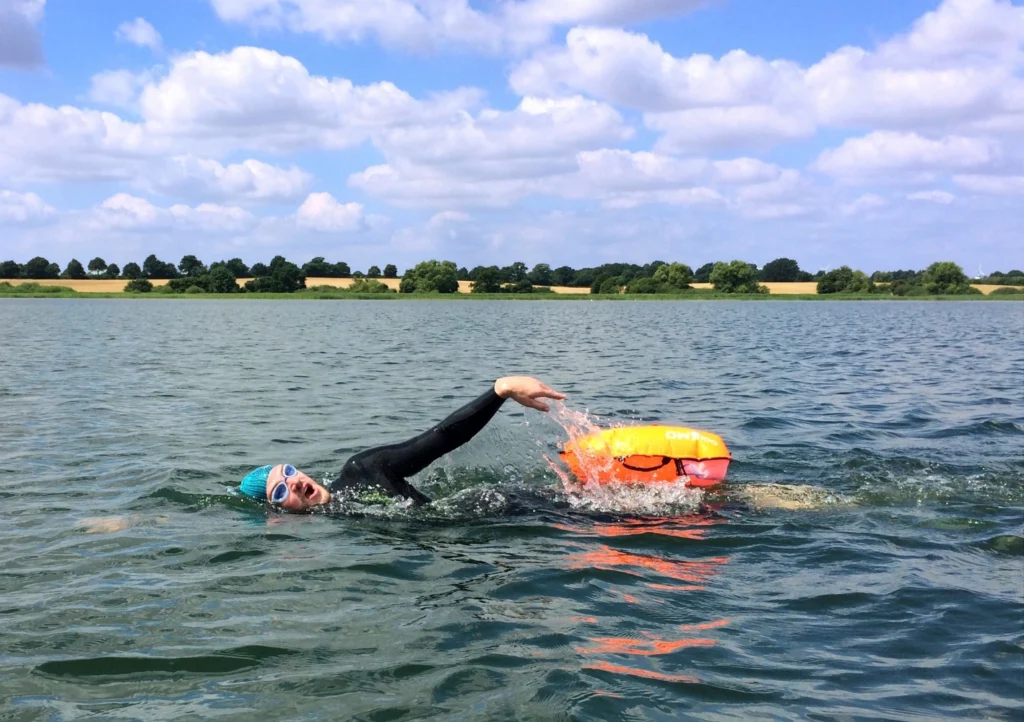
In the shower after your first longer open water session: your neck is burning, and there’s a red stripe under your armpits. For many swimmers and triathletes, wetsuit chafing somehow comes with the territory – but it doesn’t have to. Chafing spots don’t appear at random, but at very specific points and for understandable reasons.
The most affected areas are the neck, the armpits and sometimes the inside of the upper arms or the area around the wrists. When swimming front crawl, you turn your head to breathe hundreds of times, and your arms circle in a wide, sweeping movement. Every little friction point adds up over the distance.
In this article, we at FlipSoc show you why a wetsuit chafes, how to prevent it with the right fit, technique, careful donning and protection, and what to keep in mind for aftercare in general.
In short: A wetsuit usually chafes at the neck and under the armpits, because the collar or material rubs against the skin with every breathing turn and every arm stroke. Common causes are a poor fit, a suit that isn’t sitting right, salt, stubble and unfavourable technique. You can prevent it with a well-fitting wetsuit, careful donning, neoprene-safe skin protection and a fresh-water rinse.
Wetsuit chafing: what are the causes?
A wetsuit chafes because, at certain points, the edge or material of the suit shifts very slightly against the skin with every movement. Over a longer swim, this friction adds up until the top layer of skin is irritated.
Neoprene itself isn’t rough. The problem arises where the suit doesn’t move fully with the skin: at edges such as the collar, at creases, at seams or where material bunches up and stretches again during movement. On top of that, there are factors that increase the friction.
The most common causes at a glance
| Cause | Typical spot | What helps |
|---|---|---|
| Collar too tight or too loose | Neck, nape | Check the fit, close the collar properly |
| Suit sits too low, material missing at the top | Armpits, shoulders | Work the material upwards when putting it on |
| Creases and rolls | Armpits, elbows, backs of the knees | Smooth out creases, check the fit |
| A lot of head rotation when breathing | Nape, side of the neck | Refine your breathing technique |
| Salt water | All friction points | Apply protection, rinse well after swimming |
| Stubble | Chin, neck | Adjust when you shave, apply protection |
| Seams and Velcro | Nape, zip area | Close the Velcro neatly, smooth the collar |
How do I stop my wetsuit chafing my neck?
To stop your wetsuit chafing your neck, the collar needs to fit snugly without squeezing, be closed neatly and have no edges sticking out. A collar that’s too loose moves with every breathing turn. One that’s too tight presses and rubs.
When closing it, make sure the Velcro or collar tab lies flat. If a corner of the Velcro sticks out, it can rub a real groove into your neck over the distance. Also check that the skin on your neck is completely under the collar and not partly pinched.
Beard, shaving and neck
An underestimated factor is stubble. One or two days’ growth acts like fine sandpaper on the collar – for both skin and neoprene. Some swimmers therefore shave right before a race, others prefer to let their beard grow a bit longer, because longer hair is softer. Try out what works for you, but not on race day.
Why does my wetsuit chafe under the armpits?
A wetsuit usually chafes under the armpits because, during front crawl, the arm is stretched far forward and the material stretches strongly and then bunches up again. If the suit sits too low or there’s too little material in the shoulder area, this friction increases.
It’s also a question of fit. It’s normal for a wetsuit to have a tiny bit of material at the armpits. But if there are large creases or rolls, they rub against the inside of your upper arm with every stroke. Conversely, if there’s too little material, the suit pulls at the shoulder with every stroke and the edges move across your skin.
A lot depends on putting it on correctly: if the material at the legs and hips hasn’t been worked up far enough, it’s missing at the shoulders. The suit then “hangs” and works against you with every arm stroke.
What role does fit play in chafing?
Fit plays the most important role in chafing: a wetsuit that fits like a second skin moves with your body and hardly rubs at all. A suit that’s too loose forms creases, one that’s too tight constricts and presses at the edges.
A well-fitting swim wetsuit is snug everywhere, lets you breathe freely and has no water pockets. A bit of material under the armpits is normal. The seals at the neck, hands and feet should be tight without constricting. We’ve described in detail how to find the right size and check the fit in our article on wetsuit size and fit.
Fit check against chafing
- Close the collar: can you fit a finger between collar and neck without it flapping loosely?
- Stretch your arms forward as in a front crawl stroke: does it pull hard at the shoulders?
- Under the armpits: are there large creases or rolls?
- Turn your head as when breathing: does the collar edge rub noticeably?
- Back and hips: does the material lie flat without air bubbles?
How does front crawl technique affect chafing?
Front crawl technique has a big influence on chafing, because excessive head rotation when breathing and a very wide arm circle increase friction at the neck and armpits. The calmer and more efficient the movement, the less the suit works against your skin.
If you lift your head to breathe or turn it very far, you push the collar across your neck with every breath. Breathing where your head turns with your body rotation and one eye stays in the water reduces this movement. Sighting in open water, i.e. looking for the buoys, can also strain the neck. You’ll find more basics in our article on open water swimming for beginners.
When it comes to technique: a course or feedback from a coach often achieves more than hours of experimenting. An efficient stroke isn’t just faster, it’s also kinder to your skin.
What helps against wetsuit chafing? Protection compared
What helps most against chafing is a good fit, careful donning and neoprene-safe skin protection on the known friction points. Be careful with protective products, because not every grease is compatible with neoprene.
- Special anti-chafe products: There are sticks, creams and sprays that are explicitly labelled as neoprene-safe. Look for this note from the manufacturer and apply a thin layer to your neck, nape and armpits before putting on the suit.
- Petroleum-based greases and oils: Be careful. Such products can damage neoprene, seams and glue and harm the suit over time. We advise against them.
- Lycra under the wetsuit: A tight-fitting, thin Lycra or rash guard shirt with a high collar can absorb friction at the neck and armpits. When swimming in a wetsuit, it has to fit very tightly so it doesn’t form creases of its own.
- Protecting your skin after swimming: Irritated skin needs rest. Leave the area exposed to the air as much as possible and avoid further friction.
Our advice: test your protective product in training, not on race day. And apply it before you get into the suit – that way you avoid cream residue ending up on the outside.
How are putting on your wetsuit and chafing connected?
Putting on your wetsuit and chafing are closely connected, because a wetsuit that’s been put on incorrectly doesn’t sit where it should – and then rubs in the wrong places. If material is missing at the top, the suit pulls at the shoulders and the collar slips.
The basic rule: work the material up from the bottom in small sections. First feet and legs, then hips and crotch, then upper body and arms. Only once the material sits properly at the legs and hips is there enough room at the top for free shoulders. You’ll find the complete step-by-step guide in our article How to put on a wetsuit.
Where a donning aid helps
At the feet and hands in particular, slipping through is often the most exhausting part. If you have to yank at the seals, you often don’t have the patience afterwards to carefully work the material up. This is where FlipSoc comes in: you pull the donning aid made of smooth ripstop nylon over your foot or hand and slip in, and the neoprene glides over the nylon through the seal. Then you pull FlipSoc back out. That saves energy and time you can invest in a proper fit at the shoulders and collar. Classic alternatives are a thin sock or a plastic bag, which tears more easily though. FlipSoc is suitable for jersey-lined wetsuits (fabric on the inside), as is common in swimming and triathlon.
Why does salt water make chafing worse?
Salt water makes chafing worse because salt crystals act like a fine abrasive as they dry on skin and material, and they also dry out the skin. That’s why chafing is more common on long swims in the sea than in a lake.
Rinse yourself and the suit with fresh water as soon as possible after swimming in the sea. We explain how to care for your wetsuit properly after salt water in our swimming guide for wetsuits.
Checklist: avoid chafing before your next swim
- Check the fit, especially at the collar and armpits.
- Put the wetsuit on carefully from the bottom up, working the material up in small sections.
- Smooth out creases at the armpits and elbows.
- Apply neoprene-safe skin protection to neck, nape and armpits.
- Close the Velcro and collar smoothly and neatly.
- Plan your beard and shaving in good time.
- After swimming, rinse your skin and the suit with fresh water.
- Test new suits and protective products in training, not in a race.
What to do if it has already chafed? General aftercare
If your skin has already chafed, gently clean the area with clean water, pat it dry and avoid further friction until the skin has calmed down. These are general tips, not medical treatment.
Give the area as much air and rest as possible. A loose, soft shirt without seams on the affected spot is more comfortable than a tight collar. If the skin is broken, weeps heavily, becomes noticeably red, feels warm or doesn’t heal, please have it looked at by a doctor or pharmacist. With open wounds, you shouldn’t go into the water until they’ve healed.
Frequently asked questions about wetsuit chafing
Is it normal for a new wetsuit to chafe?
A new suit can feel a bit stiffer at first, and the edges don’t lie perfectly yet. But heavy chafing is usually a sign of an issue with fit, donning technique or missing skin protection. Test new suits on shorter distances first.
Can I use grease or oil against wetsuit chafing?
We advise against it. Petroleum-based greases and oils can damage neoprene, seams and glue and harm the suit over time. Use products that the manufacturer explicitly labels as neoprene-safe instead.
Does a Lycra shirt under the wetsuit help against chafing?
A tight-fitting, thin Lycra shirt with a high collar can absorb friction at the neck and armpits. But it has to fit very tightly so it doesn’t form creases of its own. Be sure to try it out in training first.
Why does my wetsuit only chafe on one side of my neck?
Chafing on one side is often related to breathing: if you only breathe to one side, you always turn your head in the same direction. Bilateral breathing, a calmer head turn and targeted skin protection on that side can help.
Can a wetsuit that’s too big cause chafing?
Yes, a suit that’s too loose forms creases and rolls that rub against the skin with every movement, especially under the armpits. In addition, a collar that’s too loose moves when you breathe. A wetsuit should fit snugly like a second skin.
Conclusion
If your wetsuit chafes, it’s not fate, but usually a solvable combination of fit, donning technique, swimming technique, salt and missing protection. A well-fitting, carefully donned wetsuit, a neatly closed collar and neoprene-safe skin protection on the neck and armpits solve most problems. We advise against petroleum-based greases and oils, because they can damage the material.
Test changes in training, notice where it rubs and adjust step by step. That way your next open water swim will be one thing above all: comfortable.
If you want to save energy when putting on your wetsuit and have more calm for a proper fit, check out FlipSoc – the donning aid for your wetsuit.