Back Zip or Front Zip? Wetsuit Types Compared
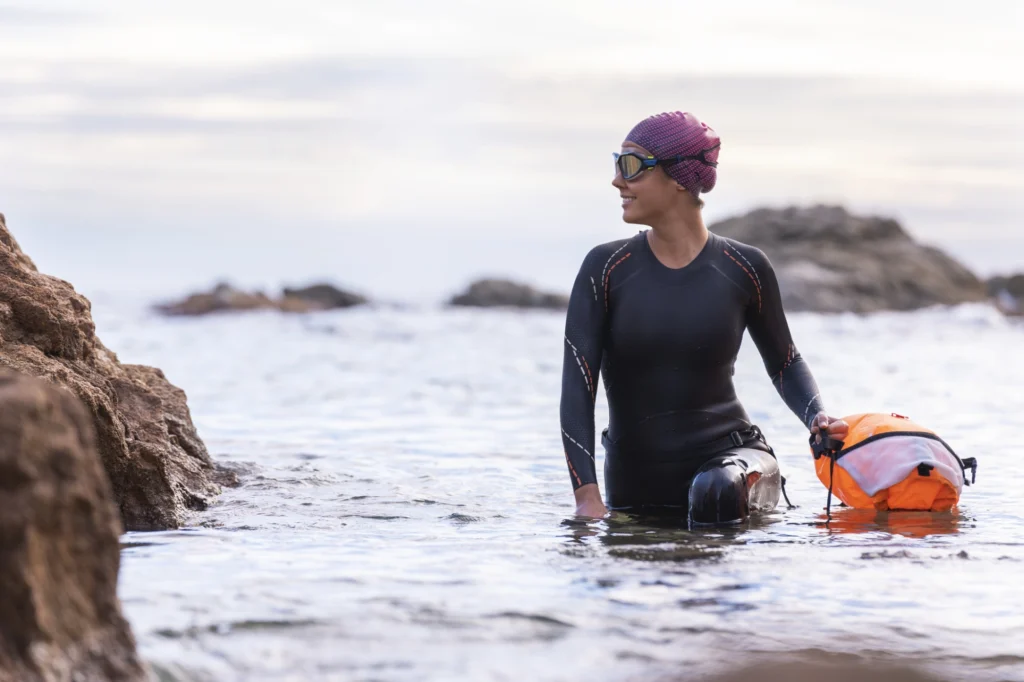
Back zip or front zip? Almost everyone buying their first wetsuit asks this question. And as soon as you walk into a shop, more terms pile on: zipless, chest zip, full suit, shorty, long john, spring suit. If you don’t know what they mean, it’s easy to end up with a suit that doesn’t suit your sport.
Yet every design has its own logic. The entry system determines how easily you get into the suit and how well it seals. The cut determines how warm it is and how freely you can move. Together, they decide how much you’ll enjoy your wetsuit.
We at FlipSoc explain the common zip systems and cuts and show you in a comparison table which wetsuit types are the easiest to put on.
In short: A back zip has a long zipper down the back and is the easiest to put on, but tends to let more water in. A front zip (chest zip) has a short entry at the chest or shoulder; it seals better and is warmer, but is a bit fiddlier. For beginners and swimmers, a back zip is often more practical; for cold water and surfing, a front zip is usually the better choice.
Back zip or front zip – what’s the difference?
The difference between a back zip and a front zip lies in the position and length of the zipper – and therefore in entry, sealing and flexibility. With a back zip, you open the suit along almost the entire back; with a front zip, you climb in through a small opening at the chest or shoulder.
Back zip: the classic zipper on the back
A back zip wetsuit has a long vertical zipper running along the spine. A long pull cord hangs down so you can close the suit on your own. The large opening makes getting in easy: you step in with your legs, pull the suit up and slip your arms in like a jacket.
The downside: a long zipper is a longer weak spot. Depending on the design, water can get in more easily at the neck, and the back is slightly less flexible because of the zipper track. Even so, triathlon and swim wetsuits are almost always back zips, because they need to go on – and above all come off – quickly.
Front zip or chest zip: the short entry at the front
A front zip or chest zip wetsuit has a short zipper across the chest or diagonally at the shoulder. You climb in through the neck opening, pull your head and shoulders through and close the zipper at the front. The neck seal and entry overlap in one piece – which makes the suit seal better.
Front zips are popular in surfing in colder water, because less water gets in and the back stays more flexible without a zipper. On the other hand, the entry is tighter and takes a bit more technique, especially with thick suits and for people with limited shoulder mobility.
Zipless: no zipper at all
A zipless wetsuit has no zipper. You get in through a very stretchy neck opening. These suits are especially flexible and well sealed, but they’re the hardest to put on because the material has to stretch a lot. They’re best suited to experienced surfers with good mobility.
Which zip type is the easiest to put on?
A back zip is the easiest to put on, because the large opening in the back leaves plenty of room for your shoulders and arms. Next comes the front zip; the zipless suit is the most demanding.
For the legs, by the way, there’s hardly any difference: whatever the entry system, you always have to get through the ankle cuffs. The real challenge with front zip and zipless suits is the shoulders and head. It helps to pull the suit up neatly to your hips before you tackle your upper body. The full step-by-step technique for both systems is in our guide to putting on a wetsuit.
What wetsuit cuts are there?
The main wetsuit cuts are the full suit, shorty, long john, spring suit and two-piece. They differ in how much of your body they cover – and therefore in how warm they are and which water temperature they suit.
- Full suit (steamer): A full suit covers the whole body with long arms and long legs. It’s the standard for surfing, swimming, triathlon and diving in Central European waters.
- Shorty: A shorty is a wetsuit with short arms and short legs. It’s suitable for warm water, for example on a summer holiday.
- Long john: A long john is a sleeveless suit with long legs, similar to dungarees. It keeps your torso and legs warm and leaves your arms free, for example for paddle sports.
- Spring suit: A spring suit combines long arms with short legs or vice versa. It’s a compromise for the shoulder seasons.
- Two-piece: A two-piece consists of separate trousers (or long john) and jacket. This allows flexible combinations and is especially common in diving, where you then get double neoprene thickness around the torso.
Which thickness you need for which water temperature is explained in detail in our table on wetsuit thickness by water temperature.
Comparison: which wetsuit type is the easiest to put on?
The following table summarises how the common designs perform when putting them on and what they’re typically used for. The ratings are a general assessment – your actual experience also depends on thickness, material and fit.
| Design | Putting on | Sealing / warmth | Typical use |
|---|---|---|---|
| Full suit back zip | easy | medium to good | Beginners, swimming, triathlon, surfing in summer |
| Full suit front zip / chest zip | medium | good to very good | Surfing in spring, autumn and winter |
| Full suit zipless | hard | very good | Experienced surfers with good mobility |
| Shorty | very easy | low | Warm water, holidays, snorkelling |
| Long john | easy | medium (arms free) | Paddling, SUP, rowing, combined with a jacket |
| Spring suit | easy | low to medium | Shoulder season, warm water with wind |
| Two-piece | easy to medium | good on the torso | Diving, flexible combinations |
One pattern is clear: the more body the suit covers and the smaller the entry, the more demanding it is to put on. At the same time, warmth and sealing increase. So there’s no perfect design – only the right one for your sport and your water temperature.
Which wetsuit is right for which sport?
For swimming and triathlon, a back zip full suit is almost always the right choice; for surfing in cool water, usually a front zip full suit; and for warm water, a shorty or spring suit. In diving, full suits and two-pieces are common.
Swimming and triathlon
Swim and triathlon wetsuits are specialised back zip full suits. They have especially flexible shoulders, a smooth outer skin for low drag in the water and, under the rules of the German Triathlon Union (DTU), may be no more than 5 mm thick. The back zip lets you take the suit off quickly in the transition area. A surf wetsuit, on the other hand, is usually too stiff at the shoulders for front crawl.
Surfing
When surfing, you paddle a lot and lie on the board. That’s why front zips are popular here: a flexible back, a well-sealed neck and less flushing when duck diving under waves. In summer and for beginners, a back zip is still a good choice because it’s easier to put on. You can read more about surfing in a wetsuit in our article Surfing in a wetsuit.
Diving
Divers move less and, at depth, are also less insulated because the neoprene compresses. That’s why diving suits are often thicker than surf suits at the same temperature. They frequently have a back zip or a front zip, sometimes a zipper running diagonally across the shoulder. Two-pieces add extra warmth around the torso.
SUP, kayaking and paddling
If you spend most of your time on the water rather than in it, you’ll often choose a long john, possibly combined with a neoprene jacket. Your arms stay free for paddling, while your torso and legs are protected.
What should you look for in the zipper?
Look for a sturdy, corrosion-resistant zipper, an easy-to-grip pull cord and a clean cover at the neck. The zipper is a moving part that has to withstand salt water, sand and pulling.
- Rinse with fresh water after every session: salt and sand make zippers stiff.
- Never force it closed: if it snags, adjust the suit and close the zipper calmly. Force tears out teeth or damages the seam.
- Don’t cut off the pull cord: without it, a back zip is almost impossible to close on your own.
- Close the Velcro at the neck neatly: Velcro closed at an angle chafes and lets water in.
Common mistakes when choosing a wetsuit type
- Buying a surf wetsuit for front crawl: it’s usually too stiff at the shoulders and tires your arms.
- Going zipless as a beginner: the suit may be well sealed and flexible, but putting it on every day becomes a workout.
- A shorty for cold water: at 15 °C, a shorty isn’t toughening up, it’s a reason to call it a day.
- Only looking at the entry system: fit and thickness are at least as important. How to find the right size is explained in our guide to wetsuit size and fit.
- A front zip with limited shoulder mobility: if reaching overhead is difficult for you, you’ll find a back zip far more relaxed.
Where FlipSoc helps you put it on – whatever the zipper
Back zip, front zip or zipless: with every full suit, you have to get past the ankle and wrist cuffs. That’s where the neoprene sticks to your skin, and many people tug at the edges – with consequences for seams and cuffs. Classic solutions are a plastic bag or a thin sock over your foot and hand. They work, but the bag is single-use and tears easily.
The FlipSoc is a reusable donning aid made of smooth ripstop nylon. You pull it over your foot or hand, slip into the leg or sleeve, and the neoprene glides through the cuff instead of sticking to your skin. That way, whatever the entry system, you get into the legs and arms faster and have more energy left for the tricky part at the shoulders and zipper.
The FlipSoc works with classic jersey-lined wetsuits – fabric on the inside – of all thicknesses and sizes, wet or dry. It isn’t suitable for smoothskin or open-cell suits, as commonly used in freediving.
Frequently asked questions about back zip, front zip and wetsuit types
Is a back zip or a front zip better for beginners?
For beginners, a back zip is usually the better choice, because the large opening in the back makes it easier to put on and take off. A front zip seals better and is warmer, but takes more technique and shoulder mobility to get into. People who surf a lot in cold water often switch to a front zip later on.
Is a front zip warmer than a back zip?
At the same thickness, a front zip usually seals a little better, because the short entry gives incoming water less to work with. As a result, the warm layer of water inside the suit is retained for longer. Modern back zips with a good neck seal can narrow the gap, though.
Can I close a back zip by myself?
Yes, that’s what the long pull cord on the zipper is for. You grab it behind your back or over your shoulder and pull the zipper up. Then you close the Velcro at the neck.
What is a shorty wetsuit?
A shorty is a wetsuit with short arms and short legs. It’s suitable for warm water, roughly from around 18 °C, depending on how much you feel the cold. It’s very easy to put on, but keeps you significantly less warm than a full suit.
Which wetsuit is allowed in triathlon?
In triathlon, special swim wetsuits with a back zip are used. Under the rules of the German Triathlon Union, they may be no more than 5 mm thick. Whether a wetsuit is allowed, mandatory or banned in a race depends on the water temperature and the race rules.
Conclusion
Back zip or front zip isn’t a matter of faith, but of sport, water temperature and mobility. A back zip is the easiest to put on and the standard in swimming and triathlon. A front zip seals better, is warmer and is popular for surfing in cold water. Zipless is the best-sealed but most demanding option.
As for the cut: a full suit for most of our waters, a shorty or spring suit for warm water, a long john or two-piece for special uses. First choose the cut that suits the temperature, then the entry system you’re comfortable with.
And to get through the cuffs faster whatever the entry system, try the FlipSoc as a donning aid for your wetsuit – with free shipping and free returns within 14 days.